
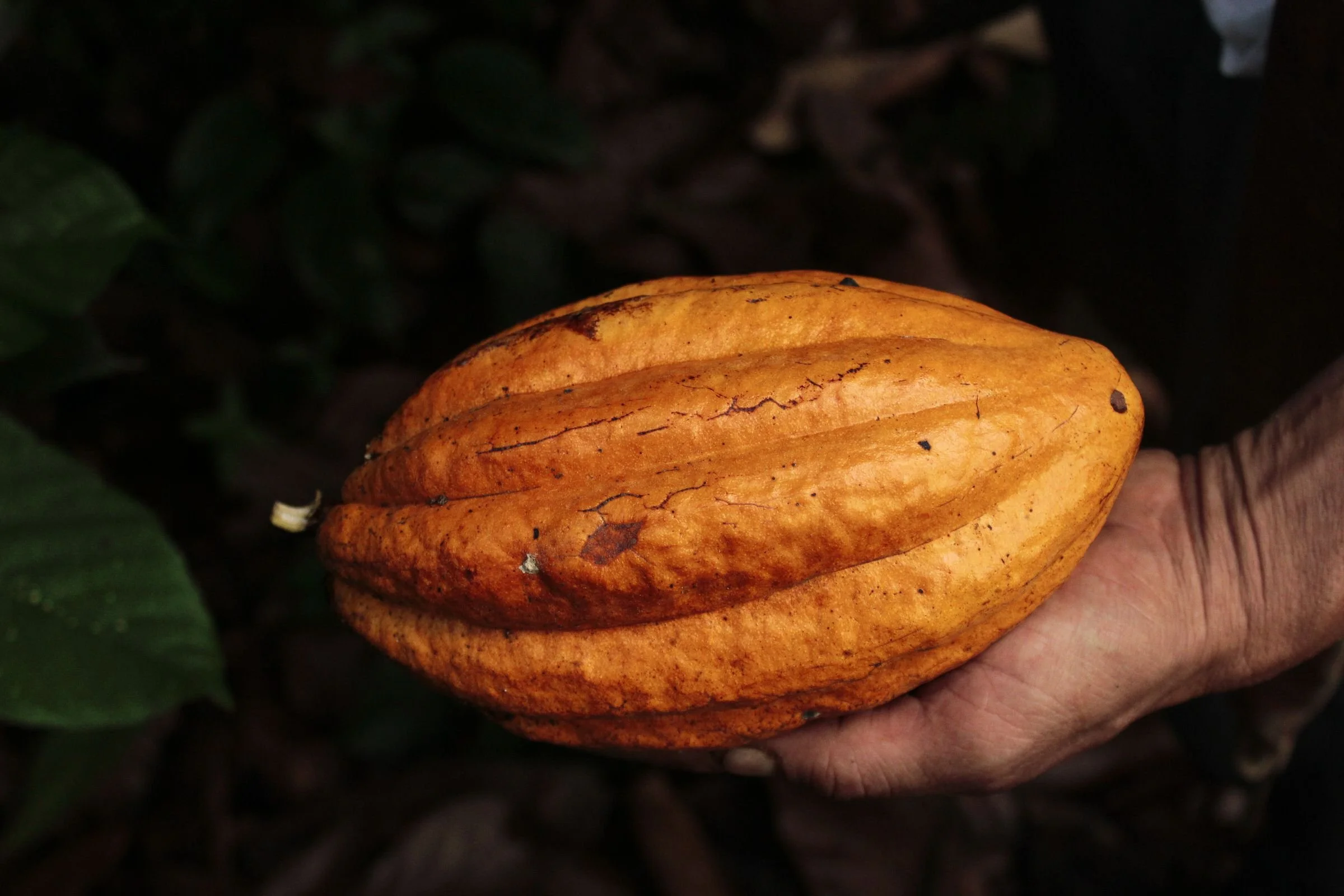
The difference between ceremonial cacao and hot chocolate starts with processing. Ceremonial cacao is minimally processed: the whole bean, slowly ground into a paste, with nothing added and nothing taken out. Hot chocolate is heavily processed: cocoa powder with most of its fat pressed out, mixed with sugar, milk solids and flavourings. One is a whole food you drink. The other is a sweet treat.
1. How they're made
Both start in the same place. Cacao pods are harvested, and the beans inside are fermented and dried. After that, the paths split.
Hot chocolate. The beans are roasted, often hot and fast, then ground into a thick liquid. That liquid is pressed to squeeze out the cacao butter, which is sold off separately. What's left is a dry cake, milled into cocoa powder. Many cocoa powders are also "Dutch-processed": washed in an alkaline solution to darken the colour and soften the bitterness. That step also strips out a large share of cacao's natural flavanols, the antioxidants it's known for.
Ceremonial cacao. The beans are shelled and slowly ground into a thick paste. The cacao butter stays in. Nothing is pressed out, washed, or added.
Luna Cacao is 100% organic Criollo ceremonial cacao paste, single origin from the Peruvian Amazon. Sun-dried and unadulterated. Fair trade, grown in Peru, and packaged with love in Australia.
2. What's actually in the cup
Turn over a tin of supermarket drinking chocolate and read the ingredients. Sugar is usually listed first, which means there's more sugar in there than anything else, cocoa included.
Instant mixes often add milk powder, vegetable oils, emulsifiers, anti-caking agents and flavourings. Café hot chocolate is usually a powder or syrup base, sometimes topped with more syrup. It's just a dessert in a mug.
Ceremonial cacao has one ingredient. Cacao. No added sugar, no dairy, no fillers.
3. How they taste
Hot chocolate tastes sweet, milky and smooth. Familiar. The chocolate flavour is there, but the sugar does most of the talking.
Ceremonial cacao tastes like the bean. Rich, earthy and a little bitter, like very dark chocolate, with fruity notes that come through as you drink. Because the cacao butter is still in it, the texture is fuller and silkier than anything made from powder.
If you're used to hot chocolate, the first cup can surprise you. Sweeten it however you like, with as much honey or maple as tastes right to you.
4. What each one is for, and how it feels
Hot chocolate is a treat. A cold afternoon, or a café catch-up. It's comfort, and there's nothing wrong with that. But with that much sugar, the lift tends to come fast and leave fast.
Ceremonial cacao is something you can drink every day. Its theobromine is caffeine's gentler cousin, for focus and energy without the spike and crash. Cacao holds more magnesium than almost any other whole food, with iron, zinc and copper riding alongside. It's rich in flavanols that keep your heart and circulation in good rhythm. Paste keeps all of it. A sweetened powder keeps far less.
| Ceremonial cacao | Hot chocolate | |
|---|---|---|
| Made from | Whole cacao bean, slowly ground into paste | Cocoa powder, with most of the cacao butter pressed out |
| Ingredients | Cacao. That's it. | Usually sugar first, then cocoa, milk solids, oils, emulsifiers, flavourings |
| Added sugar | None. You choose. | Often the main ingredient |
| Taste | Rich, earthy, slightly bitter, fruity notes, silky | Sweet, milky, mild |
| Best for | A daily ritual, a coffee swap, ceremony | An occasional treat |
| How it feels | Steady, gentle lift; a pause in your day | Quick sugar lift, then gone |
How to make the swap
Here's how to make a cup:
Chop or grate about 20g of cacao paste.
Heat a cup of water or your milk of choice until it's hot but not boiling.
Add the cacao and whisk until smooth and a little frothy.
Sweeten if you like. Honey, maple or a pinch of cinnamon all work.
Sit down with it. 5 minutes, just for you.
Ready to try it? Shop Luna Cacao 250g